


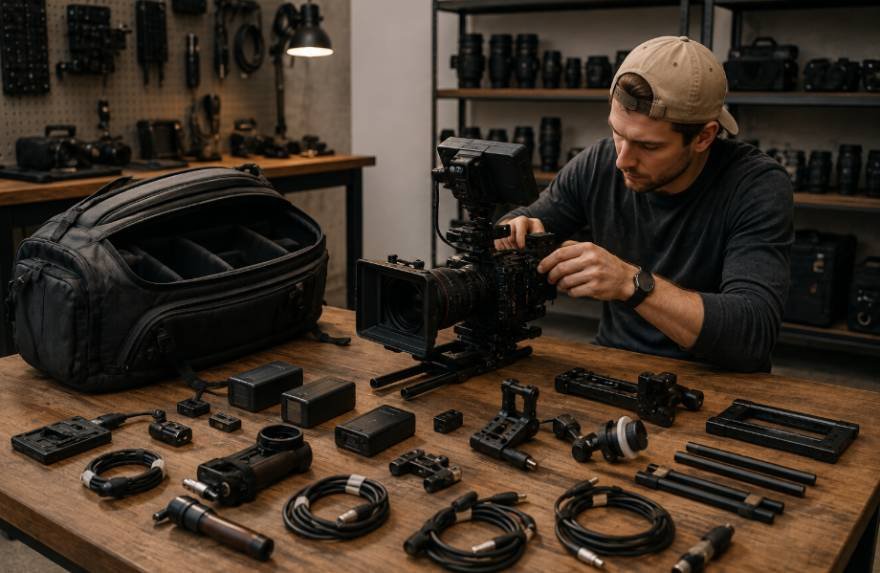
I have found that building a cinema camera package is less about owning more gear and more about knowing what actually needs to travel with you. A camera can start compact and quickly become a heavy collection of batteries, monitors, cables, rods, and accessories. Once that happens, portability becomes a problem instead of an advantage.
The better approach is to build around the shoot first. A documentary day in a crowded location, a small narrative production, and a solo commercial shoot all demand different setups. The most useful package is the one that gives you the image quality and control you need without making every setup, move, and battery change harder than it needs to be.
Start With the Camera Body
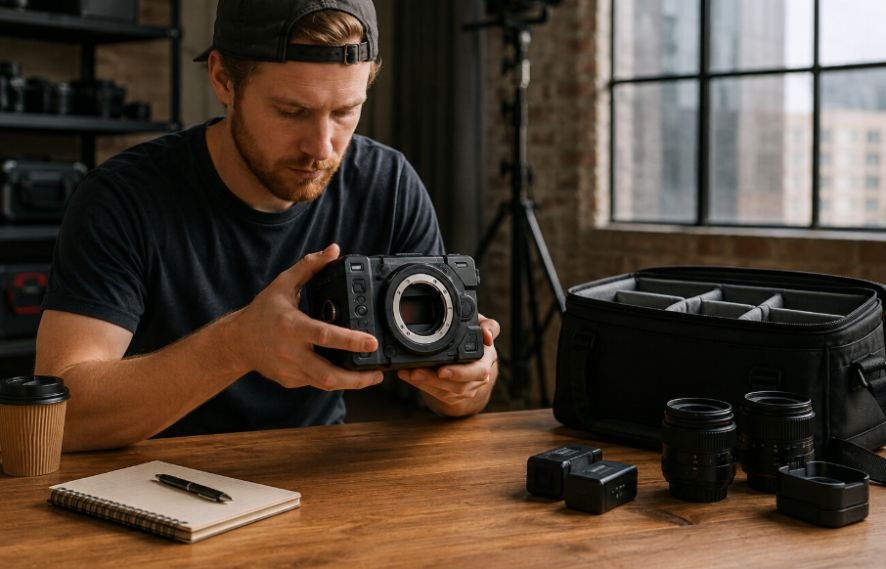
The camera body sets the foundation for everything else. For a portable package, look for a compact cinema camera with a professional recording format, strong low-light performance, useful mounting points, and enough inputs and outputs to support your workflow.
The Sony FX6 is a good example of this approach. It uses a full-frame CMOS sensor, offers more than 15 stops of latitude, and has an electronic variable ND system. That built-in ND can be particularly useful when moving between interiors and bright exteriors because you can control exposure without constantly changing filters.
The RED KOMODO-X takes a different approach with a Super 35 global shutter sensor and REDCODE RAW recording. Its compact body makes it attractive when size matters, while the global shutter can help reduce motion artifacts during fast camera movement.
You do not need one specific camera to build a good package. The important part is choosing a body that already handles some jobs internally, reducing the number of accessories you need to carry.
Choose a Lens That Covers Real Shooting Needs
For many portable setups, a versatile zoom makes more sense than starting with a large collection of primes. A 24-70mm range can cover establishing shots, medium framing, interviews, and many handheld situations without requiring a lens change.
That flexibility matters when you are working quickly. Every lens change adds another piece of equipment, another chance for dust to reach the sensor, and another decision during production.
A compact 35mm or 50mm prime can then fill a specific gap. A fast prime can be useful for low-light scenes, shallow depth of field, or situations where you want a more deliberate cinematic look.
The key is to avoid carrying focal lengths simply because they might be useful. Build around the shots you are actually likely to capture.
Build a Rig That Can Change Configuration
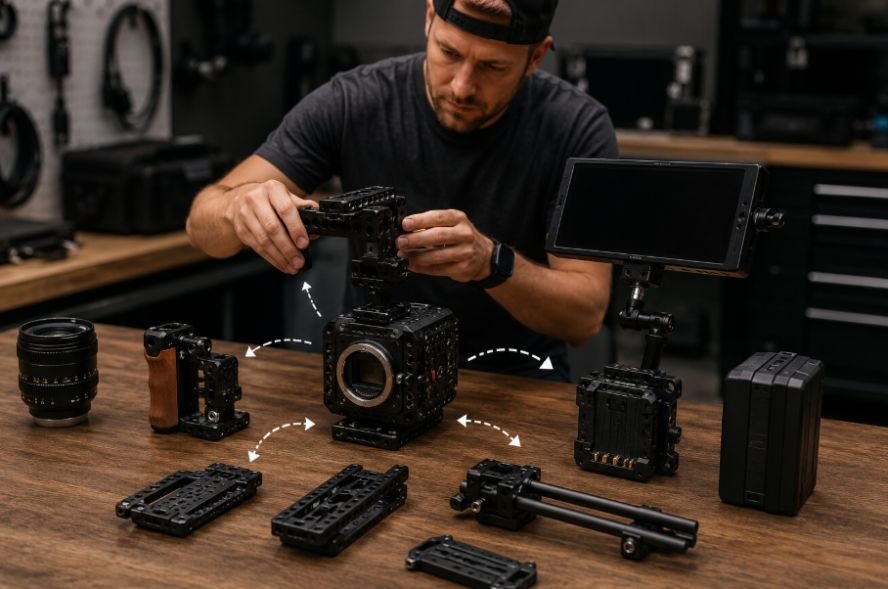
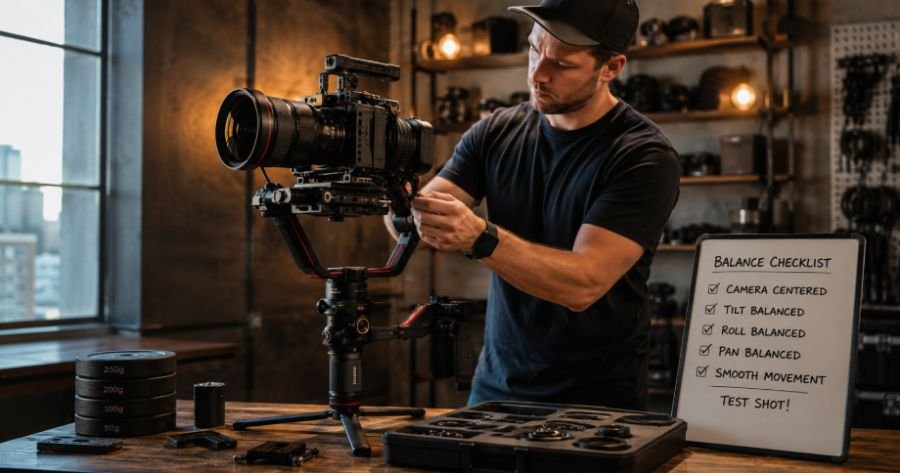
A cage, baseplate, top handle, and quick-release system can turn a bare camera into a much more usable production tool. But every accessory should have a reason to exist.
A lightweight 15mm rod system can support accessories such as a follow focus or matte box when those tools are genuinely required. A top handle is useful for low-angle shots, quick carrying, and moving between locations. A reliable baseplate also makes switching between tripod and handheld configurations much faster.
This is where modularity becomes valuable. Instead of building one oversized rig, create a core configuration and add only what the day’s production requires.
Make Power Part of the Design
Power problems can ruin a mobile shoot faster than almost anything else. A portable cinema package should have enough battery capacity for the camera, monitor, wireless accessories, and other equipment without forcing you to stop constantly for battery changes.
A compact V-mount or Gold Mount battery plate can simplify this by giving you a larger power source and a way to distribute power to accessories. The exact battery system should match the camera’s input requirements and the power draw of the complete rig.
Cable management matters here too. A short, properly routed cable is much easier to manage than a long cable hanging from the camera. Secure cables away from handles, tripod plates, and moving parts so the rig remains easy to operate.
Keep Monitoring Simple and Useful
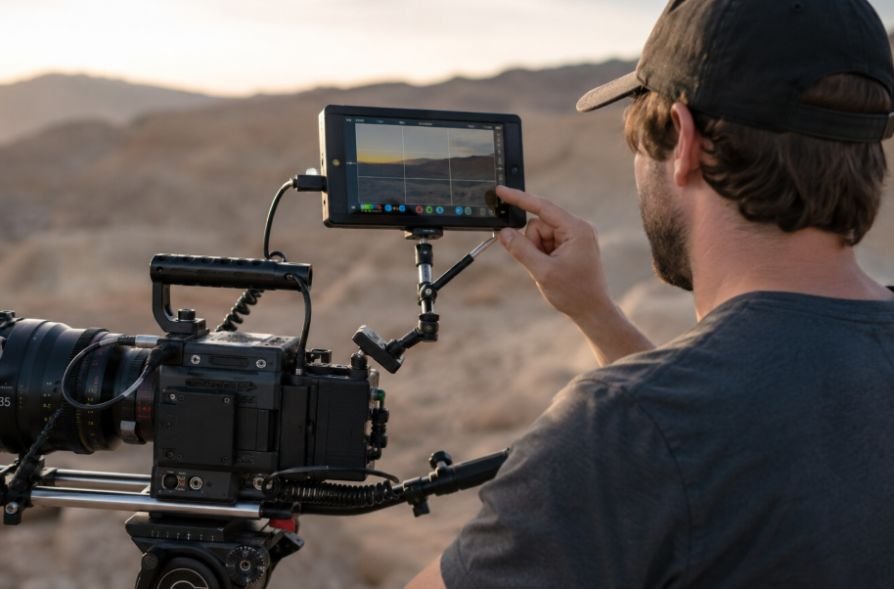
An onboard monitor should improve your ability to judge focus, exposure, framing, and image quality. A bright 5-inch or 7-inch display can be useful outdoors, especially when the camera’s built-in screen is difficult to see in direct sunlight.
You do not automatically need a recorder just because a monitor can record. If your camera already provides the required codec, resolution, frame rate, and media performance, adding another recording device may only increase weight and power consumption.
When an external recorder provides a meaningful advantage, such as a preferred codec, RAW workflow, or larger recording media, it becomes easier to justify its place in the package. That is why understanding how to choose a monitor recorder for cinema cameras should come before buying one.
Plan Your Media Around the Camera
High-resolution recording can generate a surprising amount of data. Your media needs to match the camera’s recording format and sustained data rate, not simply offer a large capacity number on the label.
For example, the RED KOMODO-X can record REDCODE RAW to qualified CFexpress media at data rates reaching up to 560 MB/s. That makes media performance a technical requirement rather than an afterthought.
A practical professional camera media workflow should cover more than the card inside the camera. Think about how cards will be labeled, when they will be offloaded, where the footage will be backed up, and how you will verify copies before formatting media.
For small crews, a pair of reliable external drives and a clear folder structure can be more valuable than carrying additional camera accessories. Good media discipline also reduces the risk of losing footage because someone accidentally formatted the wrong card.
Don’t Overlook Audio
A portable cinema package still needs usable sound. A compact shotgun microphone mounted on the camera can provide scratch audio and reference sound, while wireless microphones or dedicated production audio can handle interviews and dialogue more seriously.
If the camera offers professional audio inputs, use them when possible rather than relying entirely on adapters. The Canon EOS C70, for example, includes two mini-XLR inputs and manual audio controls, allowing a compact camera body to handle more professional audio requirements without a separate recorder.
For a small crew, that kind of built-in functionality can remove equipment from the bag while keeping the production workflow practical.
Choose Support Based on How You Move
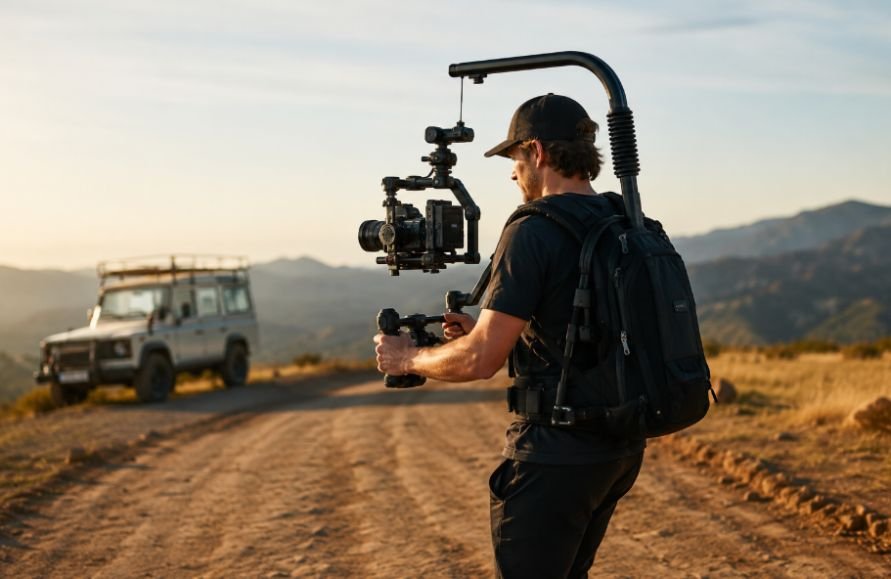
A tripod remains useful even when portability is the priority. A lightweight video tripod can provide stable interviews, controlled compositions, and repeatable framing without requiring a massive support system.
For faster work, a monopod or shoulder configuration can be more practical. A gimbal may also make sense when the production depends on moving shots, but it should not automatically become part of the package.
The same principle applies to mobile cinema production gear. Choose equipment based on the movement, locations, and shooting style rather than trying to create one rig that does everything.
Build a Small and Large Configuration
A smart package usually has at least two versions.
The stripped-down version can include the camera, lens, battery, compact monitor, media, and basic audio. This is the configuration to use when walking, traveling, scouting, or working quickly.
The expanded version can add rods, follow focus, matte box, larger battery, wireless accessories, and additional monitoring. Keeping these components modular means you can expand the camera when the production demands it without carrying the entire system everywhere.
Test Everything Before the Shoot
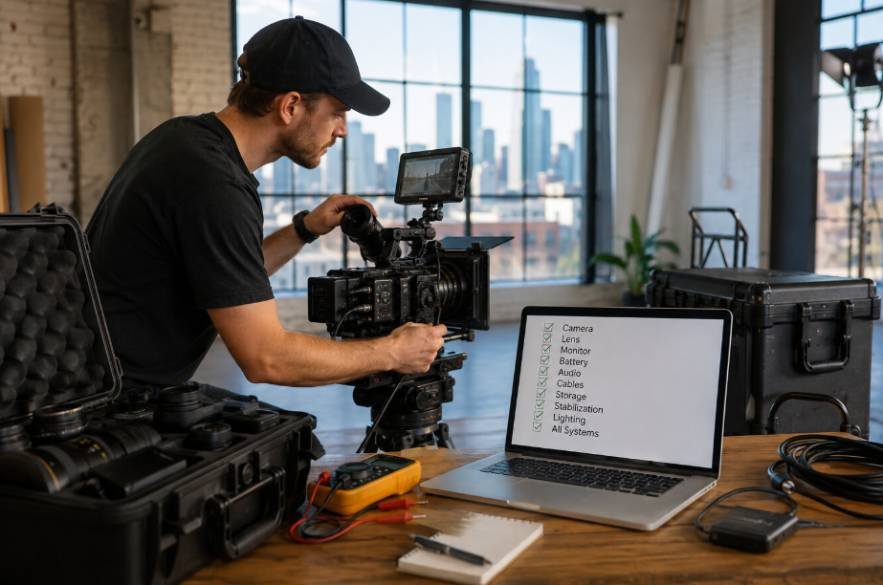
The finished package should be tested as a complete system, not as individual pieces of equipment. Mount the lens, battery, monitor, microphone, and media. Record for several minutes. Check power draw, cable clearance, audio levels, focus, exposure, and media performance.
Then carry the package for a while.
That last test often reveals problems that a specification sheet cannot. A handle may be uncomfortable. A battery may make the camera front-heavy. A monitor arm may loosen when the rig moves. A cable may interfere with a quick-release plate.
Fix those problems before production day.
Why a Smaller Package Can Make Better Productions
Portability is not about making a cinema camera as small as physically possible. It is about removing the equipment that slows you down while keeping the tools that genuinely improve the work. A well-designed package should let you move between locations, change configurations, manage media, monitor the image, and keep recording without constantly rebuilding the camera.
The best package is rarely the one with the most accessories. It is the one where every component has a clear job, and the whole system works together.
Frequently Asked Questions
1. What is the most important part of a portable cinema package?
The camera body and lens combination comes first. Choose them around the type of production, then build accessories around actual shooting requirements.
2. Is a 24-70mm lens enough for a portable setup?
For many shoots, yes. Its broad focal range reduces lens changes and works well for interviews, documentary coverage, events, and general production.
3. Do I need a V-mount battery?
Not always. A larger battery becomes useful when you need to power a camera, monitor, wireless accessories, or other equipment for extended periods.
4. How can I reduce the weight of my camera rig?
Start by removing duplicate accessories. Use built-in ND, audio, monitoring, and stabilization features when they meet your needs, and add external equipment only when it solves a specific production problem.
Let the Production Decide What You Carry
A portable cinema package should make production easier, not turn every shooting day into a gear-management exercise. Start with the camera and lens, add dependable power and media, then build outward only when a real requirement appears. That approach keeps the system lighter, faster to configure, and easier to transport.
When every component earns its place, portability stops being a compromise and becomes part of the production advantage.