



I still remember the first time I watched an overhead camera follow a football return from one end of the field to the other. Instead of observing the play from a distant sideline position, I felt as though I were moving directly above the athletes.
That immersive effect explains why cable camera systems for sports broadcasting have become such an important part of major live productions.
Unlike a fixed stadium camera, a cable-suspended camera can travel over wide playing areas while changing height, direction, speed, and viewing angle. It gives directors access to shots that cranes, handheld cameras, drones, and permanent camera platforms cannot consistently reproduce during a live event.
What Is a Cable-Suspended Camera System?
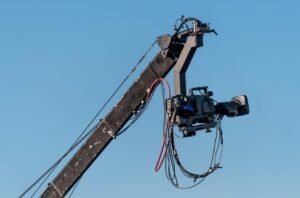
A cable camera is a remotely controlled camera platform suspended by one or more tensioned cables. Motorized winches move the platform along a programmed operating area while a stabilized camera head controls pan, tilt, roll, zoom, and focus.
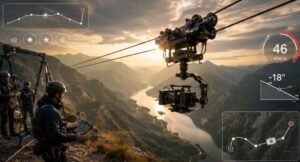
Smaller one-cable systems normally move between two fixed points. These systems work well beside racecourses, ski slopes, training fields, and straight sections of outdoor venues.
Larger multi-cable systems use three or four independently controlled winches. By changing the length and tension of each cable, operators can move the camera horizontally, vertically, diagonally, or across an entire stadium.
Systems commonly associated with major sporting events include SkyCam, Spidercam, CableCam, and other custom-built aerial platforms.
How Cable Camera Systems Work During Live Sports
Structural Anchors, Cables, and Winches
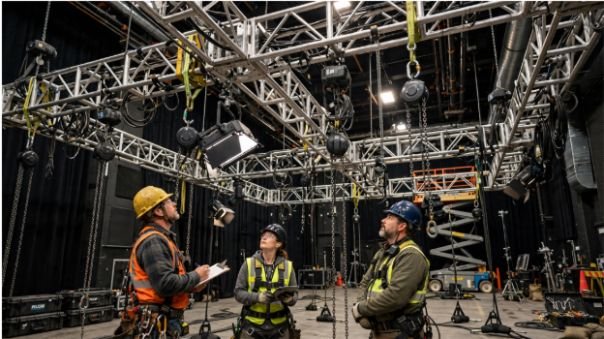
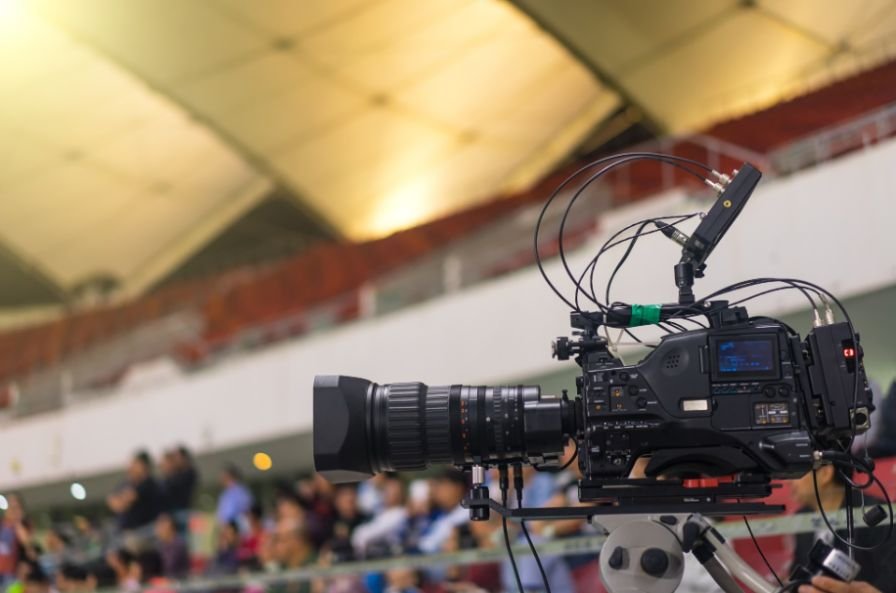
Every installation begins with approved anchor points. These may be mounted to stadium roofs, temporary towers, trusses, or engineered ground structures.
Crew members working at height during installation should also follow established fall protection for film production crews procedures, including suitable harnesses, approved tie-off points, safe access routes, and rescue planning.
High-strength cables connect the anchors to motorized winches. The winches continuously release or retrieve cable while control software calculates the camera platform’s position.
Cable tension must remain within approved limits. Excessive slack can reduce control, while excessive tension can place unnecessary stress on the venue structure.
Stabilized Camera Carriage
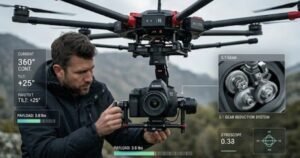
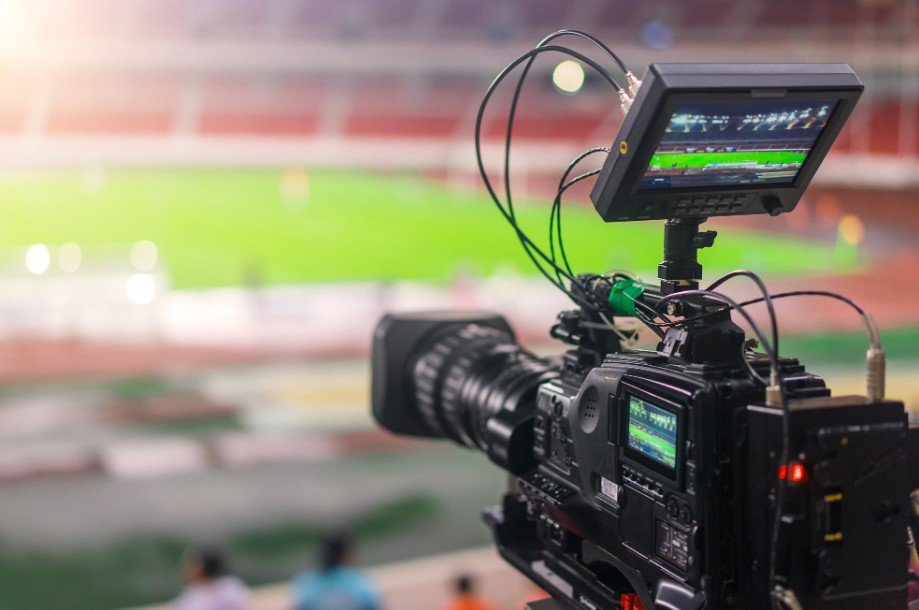
The moving carriage carries the broadcast camera, lens, stabilization head, communication equipment, and transmission hardware. Active stabilization helps keep the picture level while the carriage accelerates, stops, or changes direction.
A remote operator controls framing, zoom, focus, and exposure. A separate pilot may control the carriage movement, particularly on larger three-dimensional systems.
Separating these responsibilities allows one specialist to concentrate on safe movement while another concentrates on creating the shot requested by the director.
Video and Communication Signals
Professional systems must transfer more than a camera image. They may carry program video, return video, camera-control data, tally, intercom, microphone signals, positional information, and synchronization data.
Fiber-optic connections are often used because they can handle high-resolution video with low latency. Some temporary or remote installations use specialized wireless transmission when physical signal paths are impractical.
Why Broadcasters Use Cable Cameras
More Immersive Live Angles
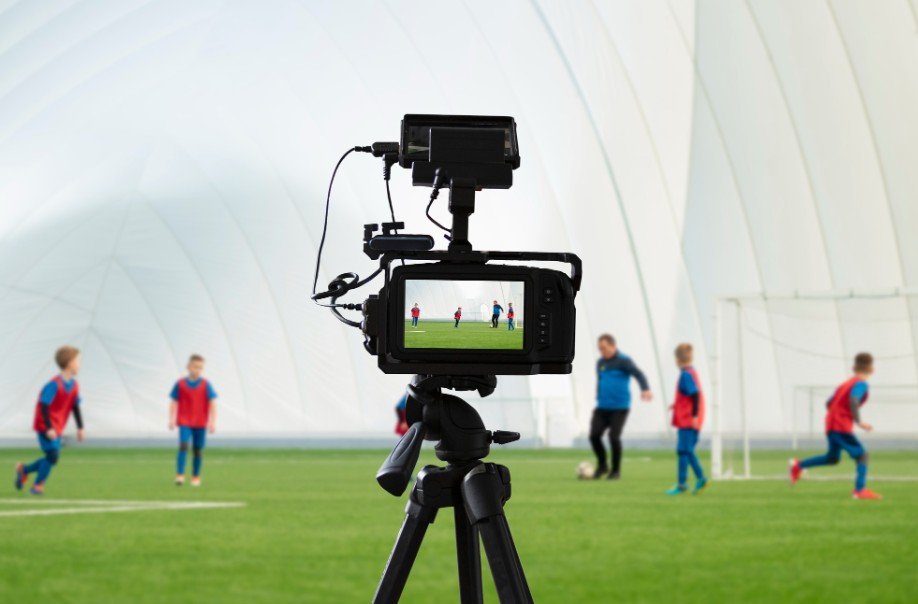
A cable-mounted camera can accelerate with athletes, descend toward the playing surface, rise for tactical views, or follow action through a large venue.
In football, it can move behind an offensive formation before following a developing play. In soccer, it can reveal team shape and passing lanes. In cricket, it can provide elevated views of field placement and movement between the wickets.
These perspectives help viewers understand both the intensity and strategy of the competition.
Coverage Across Large Venues
Traditional cameras are restricted by stands, platforms, sidelines, and fixed mounting positions. A suspended system can cover areas that would otherwise require several individual cameras.
That flexibility is valuable in stadiums, arenas, racing venues, golf courses, ski locations, and outdoor competitions where the action moves across considerable distances.
Stronger Replays and Opening Sequences
Directors frequently use cable-camera shots for introductions, player entrances, crowd reveals, halftime segments, and replays. A sweeping movement from the upper stands toward the field can establish scale before the event begins.
During replays, an overhead perspective may reveal spacing, formations, defensive movement, or incidents hidden from sideline cameras.
Choosing the Right Cable Camera Configuration
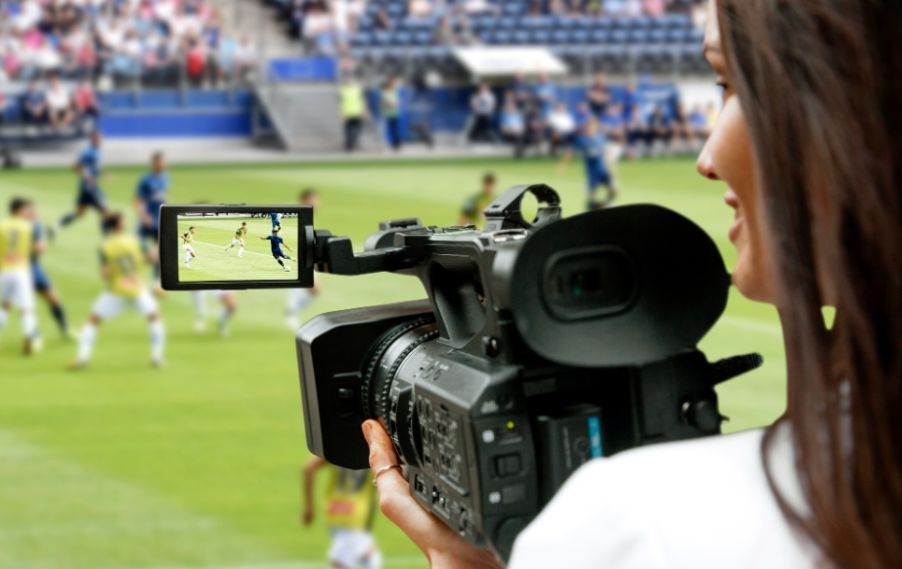
The right configuration depends on the venue, sport, desired shot, available structure, operating distance, payload, weather exposure, and production budget.
A one-dimensional system is suitable when the camera only needs to travel along a straight route. It may follow runners, vehicles, skiers, or athletes moving through a predictable corridor. A two-dimensional system offers greater lateral or vertical movement but still operates within a limited plane.
A three-dimensional system provides the greatest creative freedom. Four controlled cables allow the camera to travel through a large volume above the playing area. This is the configuration most closely associated with major stadium broadcasts.
Before selecting cable camera systems for sports broadcasting, production teams should evaluate maximum speed, usable operating area, lens compatibility, payload capacity, stabilization quality, setup time, signal requirements, weather rating, crew availability, and emergency controls.
Integrating the Camera Into a Live Production
A cable camera must work as part of the wider broadcast system. Its feed is routed to the production truck or control room, where the technical director can place it on air or send it to a replay server.
The camera team must remain in constant communication with the director. The director may request a tracking shot, tactical overhead view, crowd reveal, or parked safety position.
Operators should also understand where graphics, augmented-reality elements, and virtual advertising will appear. Systems that provide accurate positional data can help graphics engines place virtual objects consistently within the live picture.
Safety Above Athletes and Spectators
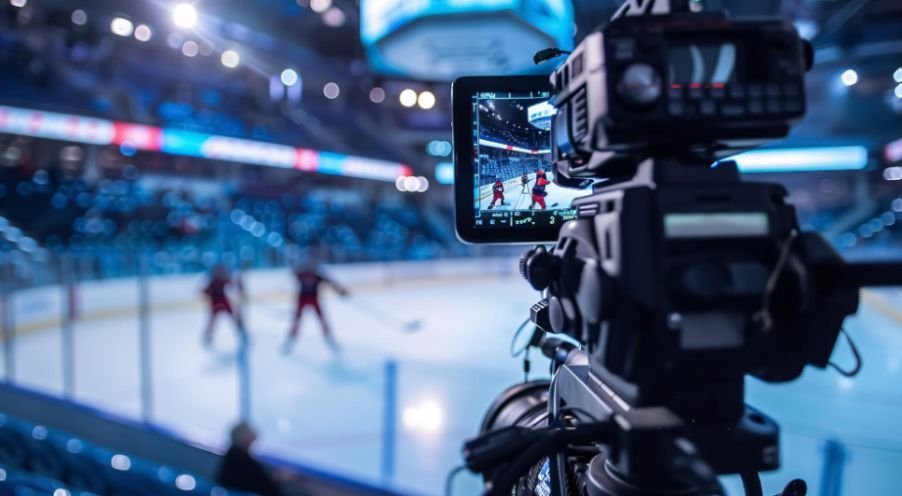
Safety must take priority over visual ambition. Structural engineers should approve anchor points, loads, cable paths, and support structures before installation.
Production teams should also follow established cable camera rigging safety for filmmakers practices when planning suspended camera movement above athletes, crew members, and spectators.
Professional systems normally include redundant cables, emergency brakes, software-defined boundaries, speed restrictions, load monitoring, and backup communication procedures.
Crews should inspect the cables, winches, connectors, carriage, camera mount, and emergency systems before every operating session. Weather conditions must also be monitored because wind, lightning, ice, and heavy rain can affect safe movement.
The operating area should prevent the carriage from entering restricted zones or descending below an approved height. Pilots should know how to park the system safely if communication, tracking, power, or control is lost.
Cable Cameras Versus Drones and Cranes
Drones provide aerial freedom, but many live sporting venues restrict their use above crowds and athletes. Battery duration, aviation regulations, weather, noise, and flight permissions may also limit continuous operation.
Camera cranes offer precise movement from a fixed base, but their reach is limited. They can also occupy valuable seating, sideline, or staging space.
Cable systems require more installation planning, yet they provide repeatable movement, extended operating time, high payload capacity, and predictable coverage within a defined area.
Frequently Asked Questions
1. What sports benefit most from cable cameras?
Football, soccer, cricket, rugby, tennis, racing, skiing, athletics, and arena sports can all benefit when the system is matched to the venue and movement pattern.
2. How fast can a cable camera move?
Speed depends on the system, cable layout, payload, venue restrictions, and safety settings. Large professional systems can follow fast-moving field action.
3. Are cable camera systems for sports broadcasting safe above crowds?
Professionally engineered systems use approved anchors, redundant components, controlled operating zones, inspections, trained crews, and emergency procedures to reduce risk.
4. Can a cable camera transmit 4K video?
Yes. Modern professional systems can support 4K UHD video, camera control, intercom, tally, audio, positional data, and other broadcast signals.
Final Perspective
I see cable cameras as more than dramatic production tools. When they are properly engineered and thoughtfully directed, they help audiences understand speed, spacing, movement, and strategy in ways fixed cameras cannot.
The strongest results come from balancing creative freedom with careful planning. A well-selected configuration, experienced crew, reliable signal path, approved rigging plan, and disciplined safety process can turn a suspended camera into one of the most valuable viewpoints in an entire live production.