



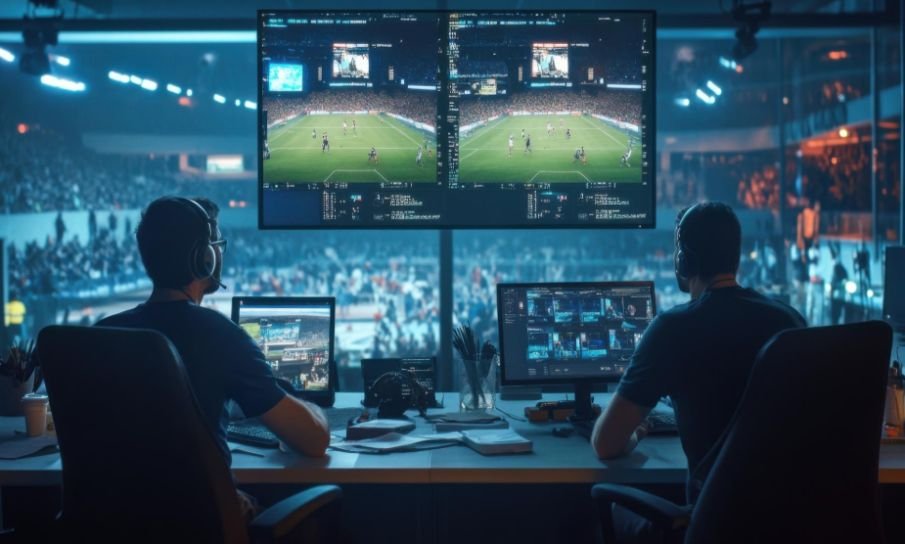
When I watch a major sporting event, I see more than athletes, scores, and cheering spectators. I think about the cameras following every movement, the audio team capturing the atmosphere, the replay operators preparing decisive moments, and the production crew making hundreds of choices without interrupting the action.
This sports broadcast production case study explores how a production team can transform a complex live competition into a polished viewing experience. It covers planning, camera placement, staffing, graphics, transmission, risk management, streaming, and the measurable outcomes that determine whether a broadcast succeeds.
Project Overview
The project involved producing a live indoor sporting championship held across two competition areas. The event included qualifying rounds, interviews, sponsor segments, award presentations, and a final that needed to reach viewers through television, streaming platforms, and social media.
The production team was responsible for creating the main program feed, recording isolated camera feeds, producing instant replays, integrating live statistics, capturing athlete interviews, and preparing short digital clips.
The central objective was not simply to show the competition. The broadcast needed to explain the action, build emotional connections with athletes, provide value to sponsors, and maintain consistent quality throughout the event.
The Main Production Challenge
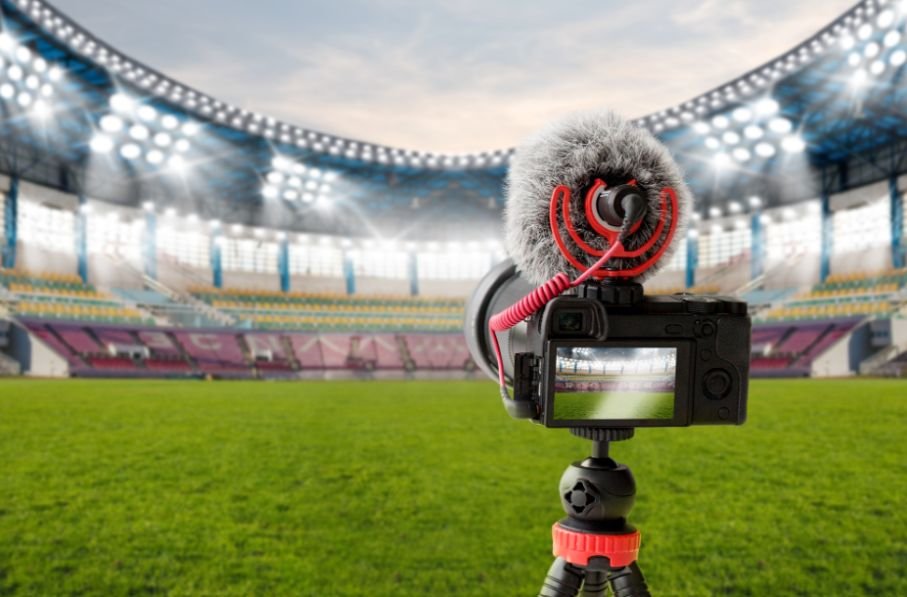
The venue created several practical difficulties. Competition could take place in both areas at nearly the same time, while walkways, spectator seating, lighting structures, and event operations limited possible camera positions.
The production also had to manage:
- Rapid changes to the competition schedule
- Restricted space for camera operators
- Continuous live graphics and scoring data
- Wireless signal congestion
- Fast replay turnaround
- Multiple distribution formats
- Sponsor visibility requirements
- Backup plans for equipment or connection failures
Every part of the workflow had to operate as one coordinated system. A delayed statistic, missed communication, incorrect replay, or broken transmission path could immediately affect the viewer experience.
Preproduction Planning and Technical Design
Site Survey and Camera Plot
The team completed a detailed venue survey before equipment arrived. Producers, engineers, camera supervisors, audio specialists, and event representatives reviewed sightlines, lighting, power, internet access, cable routes, emergency exits, and restricted areas.
For outdoor venues or partially covered stadiums, the planning process should also account for weather considerations for cable camera systems when aerial or cable-supported camera movements are part of the production. Evaluating wind exposure, rain, temperature, visibility, and shutdown procedures during the site survey helps prevent unexpected disruptions on broadcast day.
A camera plot was then developed around storytelling needs rather than camera quantity alone. Wide cameras established the scale of the venue, handheld cameras followed athletes closely,long-lens landscapes captured reactions, and fixed cameras covered entrances, scoring areas, and overhead perspectives.
Each position had a defined purpose. This prevented unnecessary duplication and helped the director know which camera would be most useful during each stage of the competition.
Crew and Communication Planning
The production included a director, producer, technical director, camera operators, replay operators, graphics specialists, audio engineers, broadcast engineers, utility crew, production assistants, and digital-content personnel.
A dedicated intercom system connected critical departments. Separate communication channels allowed the director to speak with cameras, producers to coordinate interviews, engineers to resolve technical issues, and event officials to share schedule changes.
Clear communication reduced confusion and prevented the main production channel from becoming overcrowded.
Building the Multi-Camera Workflow
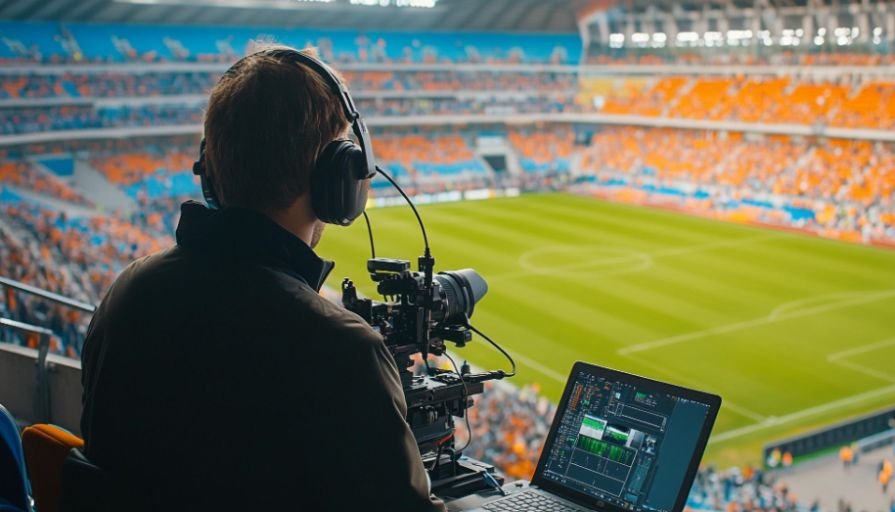
The broadcast used a combination of operated, robotic, fixed, and wireless cameras. The primary wide camera maintained continuity, while tighter positions captured technique, emotion, and decisive moments.
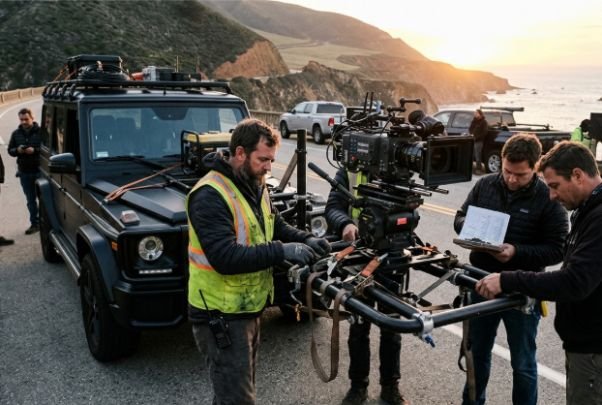
For moving arrival shots, athlete tracking, or exterior venue coverage, the crew should also follow a vehicle camera rig safety checklist for moving film shoots before operating any camera attached to or filming from a moving vehicle. This helps verify mounting hardware, secondary restraints, communication, route control, speed limits, and emergency procedures.
Wireless cameras were especially valuable near athlete entrances and interview areas, where fixed cabling would have restricted movement. However, the engineering team tested frequencies in advance and maintained backup options in case interference affected a signal.
All camera feeds entered the production control system, where the director selected live shots and the technical director managed transitions. Isolated feeds were recorded so editors could later create highlights without relying solely on the final program output.
Graphics, Replays, Audio, and Storytelling
Live statistics were integrated into the graphics system to display scores, athlete names, rankings, schedules, and results. Templates were prepared before the event, while operators verified every data field before it appeared on screen.
Replay operators recorded multiple feeds and marked important moments in real time. They prepared immediate replays for controversial decisions, exceptional performances, finishes, and emotional reactions.
Audio helped make the broadcast feel present and energetic. Directional microphones captured competition sounds, ambient microphones carried the crowd atmosphere, and commentary explained rules, strategies, and athlete backgrounds.
The production avoided treating these elements as separate technical features. Graphics provided context, replays provided clarity, commentary provided interpretation, and natural sound provided emotion.
Remote Production and Transmission
Part of the production workflow was handled remotely. Core signals were sent from the venue to an off-site team responsible for selected graphics, engineering support, media management, and digital distribution.
This reduced the number of specialists required at the venue while giving the production access to experienced personnel in other locations. It also allowed resources to be shared more efficiently across different event sessions.
The main transmission path used a high-capacity connection, while an independent backup route was available if the primary service failed. Engineers continuously monitored signal quality, latency, synchronization, and audio levels.
Content for Broadcast, Streaming, and Social Media
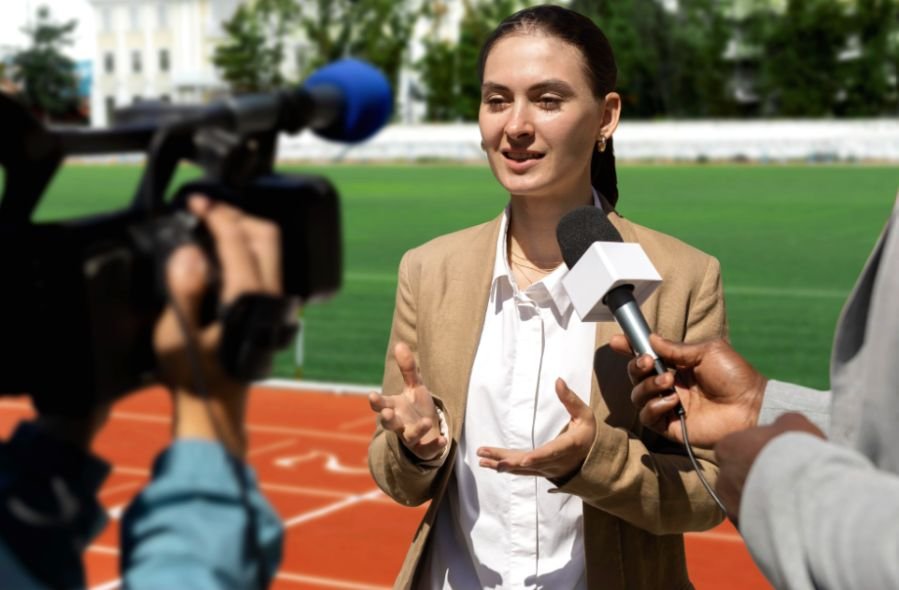
The program feed was designed for long-form viewing, but digital audiences required additional formats. Editors created short highlights, interviews, vertical videos, behind-the-scenes clips, and sponsor assets throughout the event.
Instead of waiting until the championship ended, the digital team received selected camera feeds and logged important moments as they happened. This allowed clips to be published while audience interest was still high.
The workflow gave the organizer more value from the same production infrastructure. One event generated a live broadcast, replay packages, promotional footage, social content, athlete features, and an archive for future campaigns.
Results and Measurable Outcomes
The event was delivered without a loss of the main program feed. Viewers received continuous coverage across the primary streaming platform, while additional clips expanded the event’s reach through shorter digital formats.
The production generated:
- A complete live program
- Multiple isolated recordings
- Rapid-turnaround replay packages
- Athlete interviews
- Sponsor-ready video assets
- Daily highlight edits
- Vertical social media clips
- An organized media archive
The remote workflow reduced travel requirements for selected specialists, while the multi-platform strategy increased the amount of usable content produced from the event.
Frequently Asked Questions
1. What does a sports broadcast production case study include?
It normally explains the client’s objective, production challenge, camera plan, technical workflow, crew structure, transmission method, risk controls, deliverables, and measurable results.
2. How many cameras are needed for a live sporting event?
The number depends on the sport, venue, budget, distribution plan, and storytelling requirements. A smaller event may use four to six cameras, while a major championship can require dozens of specialized positions.
3. What is remote sports production?
Remote production sends camera and audio feeds from the venue to an off-site control room or production team. It can reduce travel, centralize specialist resources, and support multiple events efficiently.
4. Why are backup systems important?
A live broadcast cannot pause while the crew repairs a failed device. Redundant power, recording, communication, and transmission systems allow coverage to continue when a component stops working.
Final Takeaways
When I evaluate this project, the most important lesson is that successful broadcasting begins long before the opening moment. It depends on careful surveys, purposeful camera positions, disciplined communication, reliable data, tested backup systems, and a content plan built for several platforms.
The technology matters, but coordination matters even more. When every department understands the story, the workflow, and its responsibilities, the production can deliver coverage that feels immediate, informative, and emotionally engaging.